
Step 01
Air Intake
Air is moved through the system. The amount of moisture available depends largely on temperature and relative humidity.
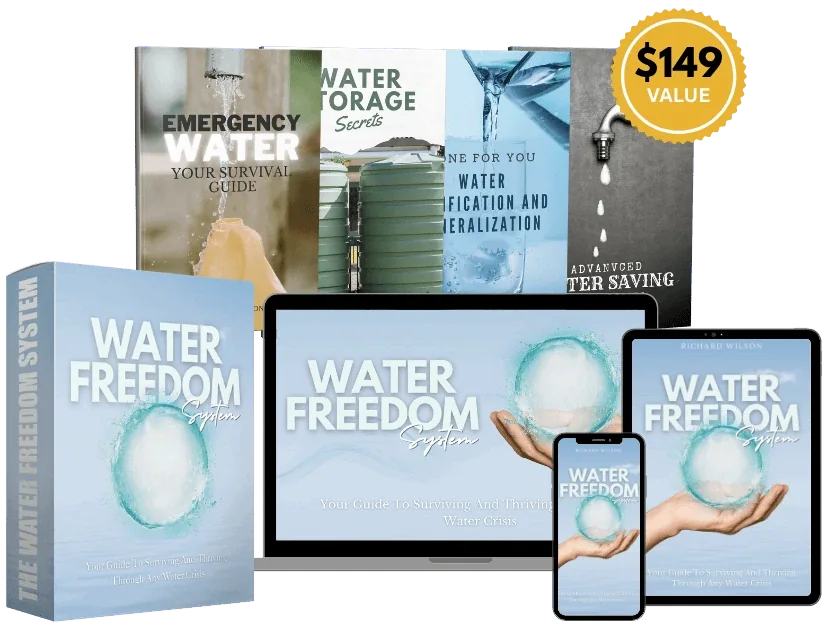
Water Freedom System is a digital guide focused on the practical idea of collecting moisture from the air through condensation. It explains the basic process, the components involved, climate considerations, water collection and treatment, and the practical questions that come with planning a DIY atmospheric water setup.
It is not a finished water-generating machine. The material is designed to help you understand the concept before spending money on components or beginning a build, while keeping expectations realistic because actual water collection depends on humidity, temperature, system design, electricity, maintenance and local conditions.
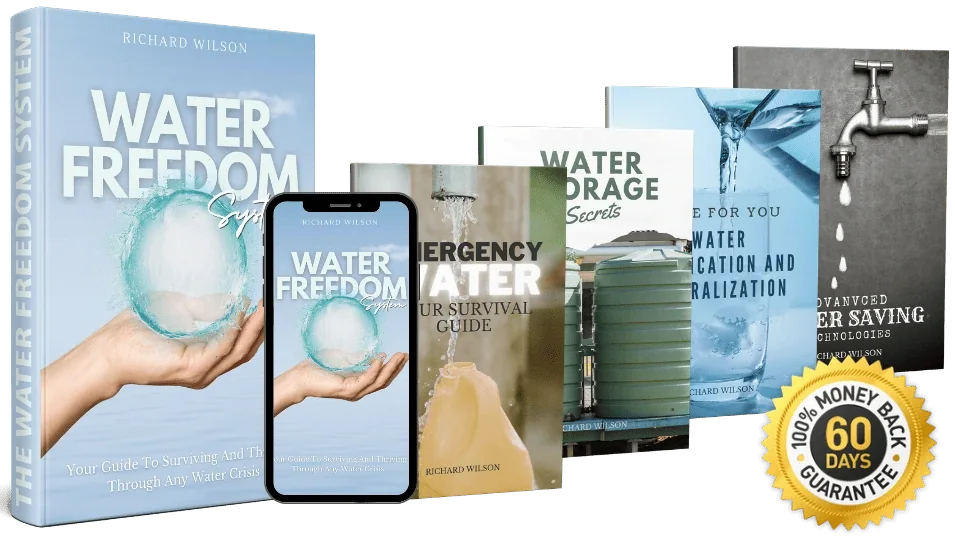
The Water Freedom System is a step-by-step digital resource about DIY atmospheric water generation. Its central subject is the process of using condensation to collect moisture from surrounding air and then handling the collected water appropriately.
The guide discusses the main components, planning considerations, climate and humidity, water collection, filtration, storage and maintenance. It also includes additional material covering emergency water planning, water storage, purification and water-saving strategies.
Because it is a digital guide rather than a physical machine, the reader is responsible for sourcing components, evaluating local conditions and following appropriate safety and water-treatment practices.
The concept follows the same basic condensation principle used when water vapour in air is cooled enough to become liquid water.
Air is moved through the system. The amount of moisture available depends largely on temperature and relative humidity.
The incoming air passes across a sufficiently cool surface or condenser so that moisture can begin separating from the air.
Water vapour turns into liquid droplets when the relevant surface reaches conditions that allow condensation to occur.
The water is collected and should be handled according to its intended use, including appropriate filtration, treatment, sanitation and testing when required.
Atmospheric water generation is based on familiar physical principles involving humidity, dew point, heat transfer and condensation. Air contains varying amounts of water vapour, and warmer air can hold more moisture than cooler air.
When moist air is cooled toward its dew point, water vapour can condense on a sufficiently cold surface. A practical system therefore has to move air, remove heat efficiently and collect the resulting water while managing energy use and maintenance.
Indicates how much moisture is present in the air relative to the amount the air can hold at its current temperature.
The temperature at which air becomes saturated and condensation can begin under suitable conditions.
Cooling performance affects how efficiently moisture can be separated from the incoming air.
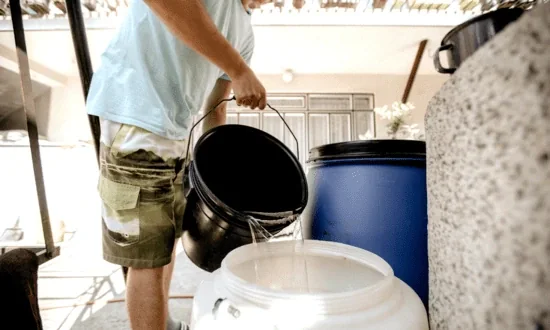
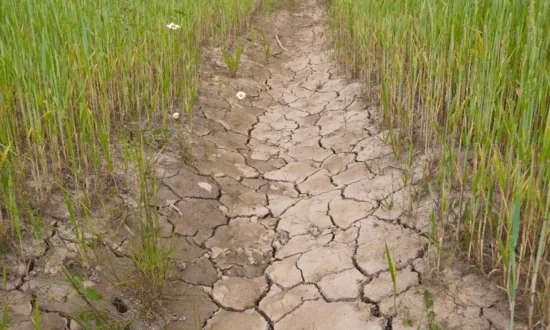
Water availability is influenced by local climate, drought, infrastructure, seasonal conditions, population growth and household demand. These factors are different from one community to another, so there is no single water solution that works equally well everywhere.
For households thinking about additional water resilience, atmospheric water generation is one concept worth understanding alongside conventional supply, storage, conservation and other water-management approaches.
The practical question is not whether one technology can solve every water problem. It is whether the underlying process, energy requirements, local humidity and maintenance demands make sense for a particular home and intended use.
Interest in alternative water strategies often starts with practical household questions rather than a desire to completely replace an existing water supply.
Understand another potential water source that can be considered as part of a broader household preparedness plan.
Explore how atmospheric water generation works before deciding whether the concept fits a remote or off-grid property.
Learn how water collection can sit alongside storage, conservation and responsible water-management practices.
Consider humidity, temperature, electricity, space and maintenance before selecting a design.
The material focuses on understanding the complete process rather than simply presenting a finished appliance.
Follow the main stages of atmospheric water generation from air intake through collection and treatment.
Learn why local weather conditions can change the practicality and output of a condensation-based system.
Understand the major categories of components and the role each part plays in a DIY setup.
Learn how collection, storage, filtration and treatment fit together after condensation occurs.
Review the importance of inspecting filters, tubing, connections and water-contact surfaces.
The package materials also cover emergency water planning, storage, purification and water-saving strategies.
The value of the guide is primarily in helping readers understand the process and evaluate whether it fits their own situation.

A condensation-based system can collect water from air, but that does not mean it can provide the same dependable volume as a conventional water supply or delivery service in every location.
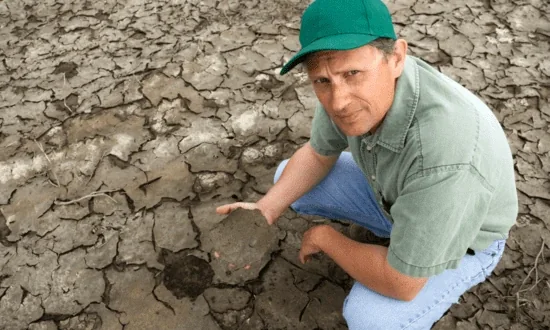
Actual output depends on local humidity, temperature, airflow, condenser performance, operating time, electricity and maintenance. Dry conditions can substantially reduce the amount of moisture available for collection.
For that reason, a DIY atmospheric water system is better evaluated as a possible supplementary water strategy unless a specific installation has been tested under the conditions in which it will operate.
The guide can be useful for people who want to understand the idea before buying components or choosing a commercial alternative.

Because the Water Freedom System is a digital guide, setup begins with reading and planning rather than switching on a supplied machine.
Understanding both sides is important before committing to a DIY atmospheric water project.
The guide is most relevant to people who want to learn how atmospheric water generation works and are comfortable evaluating a DIY project on their own circumstances.
DIY-minded homeowners, preparedness planners, off-grid enthusiasts, rural property owners and people researching alternative water strategies.
Anyone expecting a guaranteed water volume, a ready-to-use physical machine, or a system that needs no electricity, maintenance or water treatment.

Reported buyer feedback highlights the practical side of learning, building and preparing for alternative water sources. Individual experiences can vary with climate, equipment and setup.
The buyer described the instructions as clear enough to follow without being highly experienced with DIY work, and said the project was completed over a weekend with help from a family member.
One buyer said a dry summer reduced the level of their well and motivated them to look for a practical backup option rather than relying entirely on stored or purchased water.
Another buyer said the additional guides covering water storage and purification were useful alongside the main material and helped them rethink their broader emergency-preparedness setup.
The package is digital, so there is no finished atmospheric water machine shipped with the guide.
Purchase terms, pricing and refund conditions should be confirmed on the checkout page before ordering.

The supplied product information states that the digital guide is covered by a 60-day money-back guarantee. Refund eligibility and the exact process should always be checked against the current terms shown at checkout.
The guarantee concerns the digital purchase terms. It does not automatically cover hardware or components purchased separately for a DIY build.
Explore the complete digital guide and learn how atmospheric water generation works, what you need to consider, and how to plan a practical DIY approach.
Get the Water Freedom System Now →
One-time digital access · $39.69 shown price · Check checkout for current terms
Common questions about the guide, atmospheric water generation, setup and realistic expectations.
It is a digital guide that explains DIY atmospheric water generation, including condensation, components, planning, collection, filtration and maintenance considerations.
The guide explains a condensation-based process in which air is moved through a system, cooled sufficiently for moisture to condense, and the resulting water is collected and treated appropriately.
There is no single guaranteed amount. Output depends on humidity, temperature, airflow, cooling efficiency, operating time, system design, electricity and maintenance.
No. The Water Freedom System is a digital educational guide. Physical components for a DIY setup are separate.
No. Collected water should be filtered, treated, stored and tested appropriately for its intended use. Follow applicable local drinking-water guidance.
The material is written as a practical guide, but the difficulty of a DIY build depends on the design, tools, electrical requirements and the reader's experience.
Yes. Relative humidity and temperature strongly influence how much moisture is available for condensation and therefore can affect practical output.
The supplied product material lists the core Water Freedom System guide plus four additional guides covering emergency water planning, storage, purification and water-saving strategies.
That should not be assumed. A condensation-based system can be considered a supplementary approach, while actual performance depends on local conditions and system design.
The supplied product information states a 60-day money-back guarantee. Check the current checkout terms for eligibility and refund instructions.